
Our Philosophy
Raised in the home, prepared for yours.
Structurally sound, mentally steady puppies are not an accident. They come from deliberate choices made from the first day of life.
How We Raise Litters
Early work that lasts a lifetime.
We follow two well-regarded early-development programs, Early Neurological Stimulation and Puppy Culture, and adapt them to each litter.
- Days 3 to 16Early Neurological Stimulation
Gentle daily exercises. Brief, safe handling that builds stress tolerance, a stronger heart and a calmer response to new things.
- Weeks 3 to 4Puppy Culture begins
First sights and sounds. Introduction to household noise, new textures and short separations, always paired with calm, positive experiences.
- Weeks 4 to 6Confidence building
Games, not drills. Name recognition, handling for grooming and vet visits, early crate and potty habits, and plenty of play with littermates.
- Weeks 6 to 8Ready for the world
Temperament observed. Short outings, new people, new surfaces, and careful temperament notes so each puppy is matched to the right family.
Living Conditions
Family first. Never a kennel.
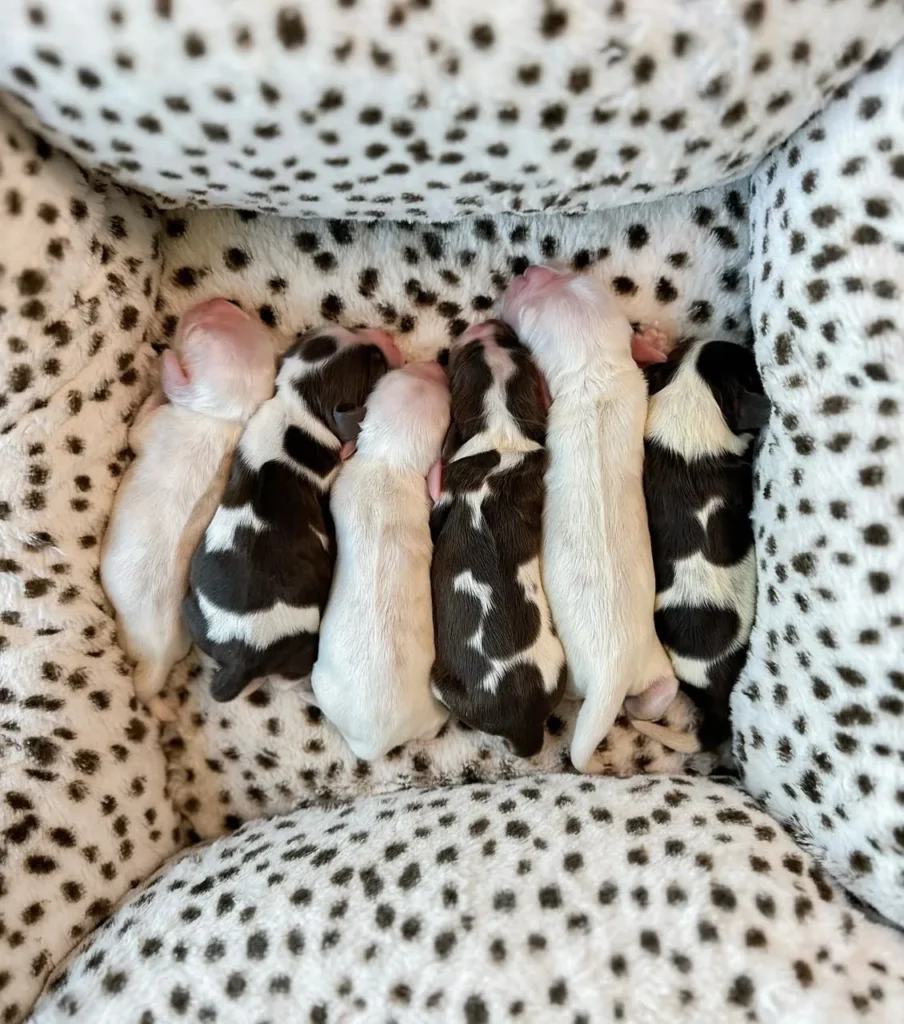
Our dogs live in our home, on the furniture, and are part of everything that happens here. Puppies are born, raised and socialized in the middle of family life.
Cocker Care Guides
Short guides from people who live with Cockers.
A Cocker is a wonderful companion and a commitment. Here is what daily life really looks like.
Grooming an American Cocker
The coat is the breed’s glory and its biggest chore. Plan on both a routine at home and a professional groomer.
- Brush several times a week, and daily for longer coats. Work down to the skin with a comb, especially behind the ears, under the legs and on the chest, where mats start.
- Professional grooming every 4 to 6 weeks keeps the coat, ears and feet manageable. Many families choose a shorter “puppy cut” for easy upkeep.
- Bathe every 3 to 4 weeks and dry completely. A damp coat tangles and irritates skin.
- Trim nails every 2 to 3 weeks and brush teeth several times a week.
- Start handling feet, ears and face from the first week home so grooming is calm for life.
Ear care
Long, heavy ears hold in warmth and moisture, which makes Cockers prone to ear infections. A weekly check prevents most problems.
- Check weekly for redness, a sour smell, dark debris or head shaking.
- Clean after baths and swimming with a vet-approved ear cleanser, and dry well. Never push cotton swabs into the canal.
- Keep ear hair trimmed as your groomer or vet advises, to let air in.
- Use a snood or ear wrap at mealtimes to keep ears out of the bowl.
- See your vet promptly for scratching, odor or discharge, because early treatment is simple.
Housebreaking tips
Cockers are eager to please and sensitive, so patience and routine work better than correction.
- Take them out often. Every two hours, plus right after waking, eating and playing.
- Use a crate sized to stand and turn in. Dogs avoid soiling where they sleep.
- Reward immediately outside with praise and a small treat. Never scold accidents, and clean them with an enzymatic cleaner.
- Keep greetings calm. Many Cocker pups urinate when excited or shy, and most outgrow it with relaxed, low-key hellos.
- Expect full overnight control around 12 to 16 weeks, with steady progress before that.
See the standard for yourself.
Read how we test our dogs, then start your application.